

2027 Neurodivergent Friendly Peer Support Retreat in South Carolina: Registration Now Open
Bring Freedom’s 2027 Peer Support Retreat brings these pieces together in a shared experience designed for peer support professionals.
Dates: April 18–20, 2027
Location: Camp St. Christopher, Seabrook Island, South Carolina
Included in your ticket: Retreat training, food, and lodging
Continuing education: Up to 21 hours
Give yourself space to learn, practice, and build connections you can turn to long after the retreat ends.
Take the next step: register today and reserve your spot. Register Here
Registration is open for Bring Freedom’s 2027 Peer Support Retreat, April 18–20 at Camp St. Christopher on Seabrook Island, South Carolina.
Join a cohort of peer support professionals for in person experiential training, meaningful connection, and time to invest in your professional growth. Your ticket includes food and lodging, with up to 21 continuing education hours anticipated.
This retreat gives you space to practice what you are learning and build relationships with people you can reach out to when you return to work.
Give Your Brain Space to Learn
Attending a conference can come with a long list of decisions. Where will you stay? What will you eat? How will you get to the next session? Will you have enough time to find lunch and get back?
Those logistics take attention and planning. For those of us who put considerable effort into managing executive functioning, they can add to the demands of an already full day.
With food and lodging provided as part of your ticket, fewer decisions compete for your attention. You can arrive knowing where you will sleep and eat, giving yourself more room to focus on the training.
That is part of our approach to a neurodivergent friendly retreat: considering the whole learning experience, including the demands surrounding the sessions.
Practice Skills You Can Bring Back to Work
Knowing a concept and using it in a real conversation are different things.
Experiential training gives you opportunities to practice an approach, reflect on your experience, ask questions, and hear how another peer professional might apply it in their setting.
How do we help peer participants break down larger goals into manageable priorities? How do we support them in choosing a starting point and identifying steps that fit their current resources and capacity? How do we help them recognize progress and adjust their plans while keeping decisions in their hands?
Learning together gives us time to work through practical questions and connect the training to everyday peer support situations.
You bring experience into the room, too. Your questions, perspectives, and approaches contribute to the learning of the cohort.
Build a Network You Can Actually Call
One of the greatest benefits of an in person retreat is having time to get to know the people learning alongside you.
A conversation can begin during a session, continue over dinner, and pick up again the next morning. Across several days, you can learn about each other’s work, discover shared interests, and build connections with professionals providing the same or similar types of peer support.
Then, when you return to work and want to explore how to apply something you learned, you have someone to reach out to.
You can pick up the phone and say, “I’m thinking about using this approach in a peer support situation. Can we talk through how that might work?”
That person has completed the same training. They understand the material and bring their own peer support experience to the conversation. You have a shared starting point for working out the details while protecting participant confidentiality.
Online training makes education accessible, but it can be difficult to build those relationships while watching a screen, especially when work tasks, messages, and other responsibilities compete for your attention.
The retreat gives you dedicated time to learn the material and develop a true professional network.
Learn as a Cohort
Learning alongside the same group across several days creates continuity. You have time to revisit an idea, reflect on an activity, and continue a conversation with someone whose perspective helped you think differently.
Our neurodivergent friendly approach recognizes that engagement can look different for different people. Discussion, observation, practice, and reflection can each contribute to learning. Some people process an idea by talking it through. Others need time to think before responding.
Meaningful participation does not require everyone to learn or connect in the same way. The goal is to create room for different learning styles while developing a shared experience you can build on after the retreat.
Peer Support Professionals From Other States Are Welcome
You do not have to live or work in South Carolina to attend. We welcome peer support professionals from Georgia, North Carolina, Virginia, and beyond, including those whose credentialing bodies accept NAADAC approved continuing education.
Bring your experience, learn alongside peers from other communities, and expand your professional connections across state lines.
Reserve Your Spot
Time away from work needs to be worthwhile. Continuing education hours matter, and so do the skills, relationships, and support you take home.
Bring Freedom’s 2027 Peer Support Retreat brings these pieces together in a shared experience designed for peer support professionals.
Dates: April 18–20, 2027
Location: Camp St. Christopher, Seabrook Island, South Carolina
Included in your ticket: Retreat training, food, and lodging
Continuing education: Up to 21 hours anticipated
Give yourself space to learn, practice, and build connections you can turn to long after the retreat ends.
Take the next step: register today and reserve your spot. Register Here

People Do Not Live in Service Silos, But Our Differences Still Matter
Which lived experience does this person want beside them right now?
A person navigating substance use recovery may find tremendous value in connecting with someone who understands that experience from the inside.
A survivor of trafficking may want someone who understands exploitation.
A person navigating mental health recovery may value someone who has walked a similar road.
A parent, spouse, or child may need another family member who understands the complicated experience of loving someone while also learning how to care for themselves.
Those forms of support can complement one another without becoming interchangeable.
That is not fragmentation.
That is choice.
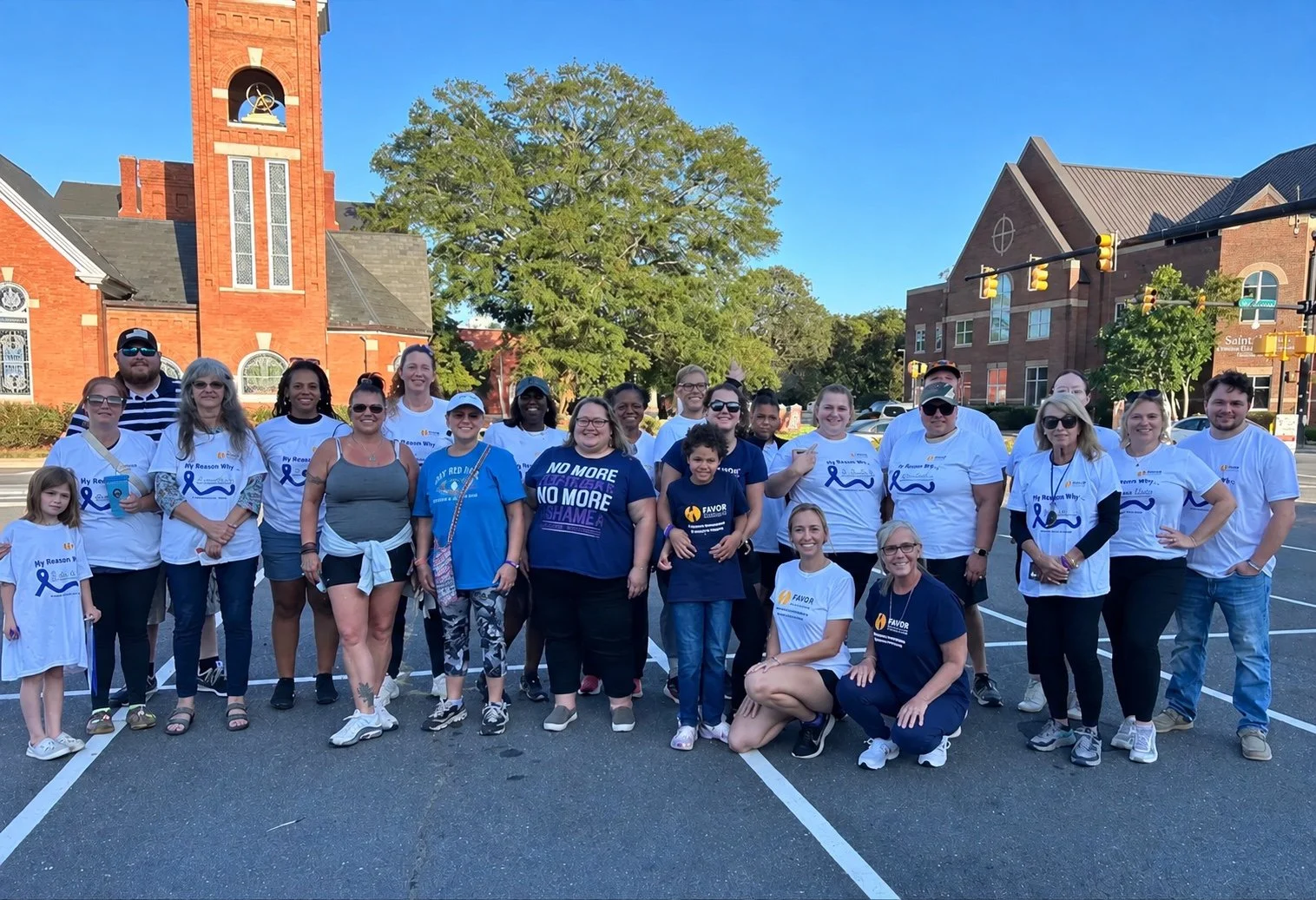
Recovery Walk, Rock Hill, South Carolina, September 27, 2024.
On September 27, 2024, we walked together in Rock Hill, South Carolina, to celebrate recovery.
Two years later, I look at these pictures differently.
I know more of the stories that came after the walk.
People I love who walked with us have returned to use.
People I love have returned to recovery.
Some have continued moving forward in recovery while navigating mental health, trauma, family challenges, housing, relationships, employment, and everything else that comes with being a human being.
And some people I have loved have lost their lives after a lifelong battle with substance use disorder.
Their absence matters.
In 2024, 79,384 people in the United States died from a drug overdose. The overdose death rate declined significantly from the year before, and that progress deserves to be recognized.
But 79,384 people still died.
Every one of those empty chairs has a name.
Some of them were names that I knew.
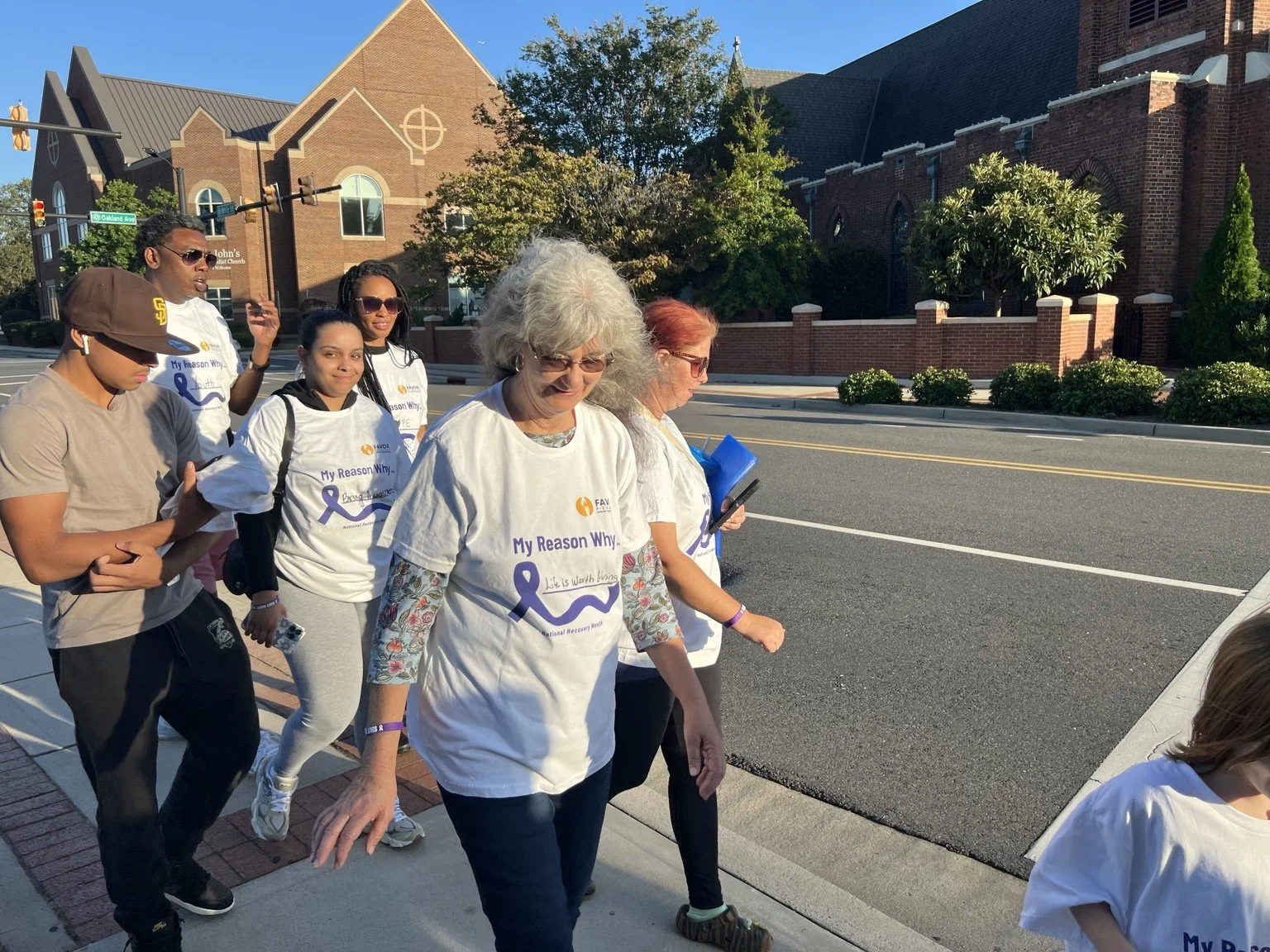
After nine years of active substance misuse and now 22 years in recovery, I have known too many of those names. I have watched people find recovery, return to use, return to recovery, build families, rebuild lives, and sometimes lose their lives.
That history does not make me believe we need to abandon the recovery systems we have built.
It makes me believe we need to elevate the way we think about them.
As our understanding of recovery grows, our systems have to grow with it.
We have to become better at recognizing the whole person while protecting the value of the individual supports, specialties, pathways, and forms of lived experience that person may choose.
As our work and relationships have expanded across the Southeast, from Virginia to Florida and west through Kentucky, Tennessee, Alabama, and Mississippi, I keep coming back to two things that may sound contradictory, but I believe both have to be true.
People do not live in service silos.
And:
The individual pieces of lived experience still matter.
I Know This From More Than One Side
I have lived experience of human trafficking and exploitation.
I have lived experience of mental health challenges.
I have lived experience of substance use disorder and long term recovery.
I am also a family member of people whose lives include these experiences individually and in combination.
And that part of lived experience matters too.
I know what it feels like to be the child of parents with substance use disorder.
I know what it feels like to love people who are struggling with substance use disorder.
I have sat up at night crying over babies who would not be held by their parents.
I have been afraid to reach out to a friend because part of me was terrified that this would be the time I discovered they were no longer here to watch their children grow up.
And I have grieved people I loved who did not survive their lifelong battle with substance use disorder.
Those experiences do not make me an expert on every family, every survivor, or every person experiencing substance use disorder.
But they make it impossible for me to believe that recovery happens to one isolated individual.
Substance use disorder does touch children.
It does touch parents.
It does touch partners, friends, workplaces, and communities.
It does affect families.
So do mental health challenges, trauma, exploitation, and the systems people encounter while trying to recover.
Fear can move through families.
Grief can move through families.
Trauma can move through families.
But so can hope.
So can healing.
So can recovery.
The Numbers Tell Us People Do Not Fit Into One Box
My own experience is personal. It should not be used to generalize everyone else’s experience.
But national data make it clear that overlapping needs are not unusual.
In 2024, 46.3 million American adults had a substance use disorder. Of those adults, 21.2 million also had a mental illness.
That is 45.8 percent.
Among adults experiencing both a substance use disorder and mental illness, only 14.5 percent received both substance use treatment and mental health treatment that year. More than 41 percent received neither.
Those numbers do not tell us why.
Availability, cost, workforce capacity, geography, readiness, eligibility, personal choice, stigma, and many other factors can affect whether someone receives services.
But they should cause us to ask:
What happens in the spaces between our systems?
Trauma complicates that picture further.
CDC research using data from adults across all 50 states and Washington, D.C., found that 63.9 percent reported at least one adverse childhood experience. More than one in six reported four or more.
Human trafficking can add still another layer. Research has documented relationships among trafficking, substance use, coercion, trauma, and mental health. Substance use may exist before exploitation, develop during it, be used as a means of coercion or control, or become connected to how someone copes with what has happened to them.
People do not arrive at our doors divided into our funding categories.
They arrive as whole people.

Recovery happens in communities, not in silos. Building bridges between specialized supports gives people more choices about who walks beside them.
Whole Person Cannot Become Generic Person
This is where I believe we need to be extremely careful.
Recognizing that people’s experiences overlap does not mean those experiences are interchangeable.
And it certainly does not mean our services should become interchangeable.
As systems increasingly recognize co occurring needs and fund integrated approaches, we cannot allow integration to become erasure.
The lived experience of recovering from substance use disorder has value.
The lived experience of navigating mental health recovery has value.
The lived experience of surviving trafficking and exploitation has value.
The lived experience of homelessness has value.
The lived experience of justice involvement has value.
The lived experience of being a family member has value.
The lived experience of being a child affected by a parent’s substance use disorder has value.
Sometimes several of those experiences exist within the same person.
They do within me.
But having one form of lived experience does not automatically give someone expertise in another.
Being a person in recovery is not the same lived experience as being the child of a parent with substance use disorder.
Being a family member is not the same lived experience as surviving exploitation.
Surviving trafficking is not the same lived experience as navigating a mental health condition.
We should not have to erase those distinctions in order to recognize the whole person.
In fact, recognizing those distinctions may be part of what allows us to truly see them.
If we say lived experience is valuable, then we have to be willing to ask:
Which lived experience does this person want beside them right now?
A person navigating substance use recovery may find tremendous value in connecting with someone who understands that experience from the inside.
A survivor of trafficking may want someone who understands exploitation.
A person navigating mental health recovery may value someone who has walked a similar road.
A parent, spouse, or child may need another family member who understands the complicated experience of loving someone while also learning how to care for themselves.
Those forms of support can complement one another without becoming interchangeable.
That is not fragmentation.
That is choice.
Funding Should Build Bridges, Not Collapse Them
This is where systems and funding decisions become incredibly important.
Funding helps determine which services exist, which positions organizations can hire, which credentials are recognized, and which types of lived experience remain available to people seeking support.
Efficiency matters.
Coordination matters.
Responsible stewardship matters.
But efficiency cannot be the only measure.
If combining services saves money while eliminating meaningful choices, we need to ask what was actually saved.
If one broadly defined peer role replaces access to several distinct forms of lived experience, we need to ask what disappeared in the process.
And if we create an integrated system that offers a person fewer choices about who walks beside them, we should be willing to ask whether we actually created a more person centered system.
The alternative is not returning to isolated silos.
It is building bridges.
A substance use peer can recognize that trauma may be part of someone’s story without becoming a trauma therapist.
A mental health peer can recognize the role substance use may play in someone’s life without becoming a substance use specialist.
Someone supporting survivors of trafficking can understand the relationship that may exist between exploitation and substance use without assuming every survivor has the same experience.
A housing professional can understand that stable housing may be essential to recovery without becoming someone’s recovery provider.
A clinician can bring clinical expertise.
A family peer can bring family lived experience.
Each person brings something different to the table.
The table becomes stronger because those differences remain.
We should know enough about one another’s work to be able to say:
There is someone else who may have something valuable to bring to this table. Would you like us to bring them in?
Not instead of me.
With me.
And, importantly, only if the person wants them there.
That is where whole person support and person centered support meet.
The Person Has to Remain at the Center
We can build a beautifully coordinated system and still get this wrong if we forget whose recovery it is.
Someone may need housing before they are ready to address trauma.
Someone may want to rebuild a relationship with their children.
Someone may choose medication as part of recovery.
Someone may want a particular kind of peer support.
Someone may want several kinds.
Someone may decline a service that everyone around the table believes would help.
Person centered recovery has to leave room for that too.
Otherwise, we have simply built a more sophisticated system for making decisions about people instead of with them.
There is another number I want us to remember.
In 2024, 23.5 million American adults who reported ever having a problem with alcohol or drug use considered themselves in recovery or recovered.
Millions of people are recovering.
People return to recovery.
Families recover.
People build lives they once could not imagine.
I am one of them.
Looking Back at the Walk
So when I look back at September 27, 2024, I think about much more than a Recovery Walk.
I think about the people in those pictures.
I think about the people I love who returned to use.
I think about the people who returned to recovery.
I think about the people who are still figuring out what recovery looks like for them.
I think about children growing up affected by the substance use of people they love.
I think about families waiting for phone calls.
I think about the people who will not be there for the next walk.
I think about their families.
I think about my own family.
I think about my own life.
The people we have lost did not live in service silos.
Neither do the people who are recovering today.
They are whole people.
Seeing someone as a whole person does not require us to pretend that the individual pieces of their story do not matter.
They do.
So as our relationships continue to grow across the Southeast, I do not want us to choose between isolated services and one collapsed recovery system.
I want something harder.
I want connected systems that preserve specialization.
I want peers valued for the specific lived experience they bring.
I want professionals respected for the expertise they have developed.
I want organizations confident enough in what they do well to also recognize when someone else needs to come to the table.
I want funding that makes collaboration possible without requiring everyone to become the same thing.
And most importantly, I want the person seeking recovery support to have meaningful choices about who walks beside them.
People do not live in service silos.
But that does not mean every service should become the same service.
A bridge connects two things.
It does not require either of them to disappear.
Maybe that is what I hope we are walking toward.

Read the Research and Data
SAMHSA: 2024 National Survey on Drug Use and Health
National data on substance use disorder, mental illness, co occurring conditions, treatment, and recovery.
Read the 2024 National Survey on Drug Use and Health
SAMHSA: Co Occurring Disorders
Information about the intersection of mental health conditions and substance use disorders.
Read about co occurring disorders from SAMHSA
CDC National Center for Health Statistics: Drug Overdose Deaths in the United States, 2023 to 2024
Final national overdose mortality data, including the decline in the overdose death rate during 2024.
Read the CDC overdose mortality report
CDC: Prevalence of Adverse Childhood Experiences Among U.S. Adults
Research examining adverse childhood experiences using data collected across all 50 states and Washington, D.C.
Read the CDC research on adverse childhood experiences
Substance Use and Trauma Bonding Among Survivors of Sex Trafficking
Research examining relationships among substance use, coercion, trauma bonding, and sex trafficking.
Read the trafficking and substance use research on PubMed
Substance Use Disorders Among Human Trafficking Victims
Research examining substance use disorders among human trafficking survivors receiving emergency department care.

What Comes After the Uncomfortable Part?
What happens when the future we want requires us to face the very things we would rather avoid? A conversation in a local drug court became a powerful reminder that recovery isn't about seeing the whole journey. It's about building the skills to face what is directly in front of us—and having the courage to take the next step.
Recently, I was leading a group for a local drug court. We were working toward something that can be surprisingly difficult when you're rebuilding your life: dreaming about the future.
But before we could really talk about what people wanted their lives to look like, we had to talk about the things that made those possibilities feel out of reach.
One participant shared a very real worry about having a felony on their record. Even if they were eventually eligible for expungement, they worried that it could still show up on some background checks.
What happens when an employer asks about it?
What about an eviction you have to explain to a future landlord?
What do you say about the gaps in your work history?
These weren't excuses. They were uncomfortable realities.
And I didn't want to tell them those things wouldn't matter, because sometimes they will.
Instead, I asked the group a question.
"Where do you think is the most unlikely place you would find a felon?"
They started thinking about it.
Then I told them: the White House.
That got their attention.
The current president has a felony conviction.
I wasn't bringing politics into the room to debate politics. I wanted them to challenge an assumption.
So I asked another question:
"If someone with a felony conviction can become president of the United States, have you stopped to think about what you might still be able to do?"
The point wasn't that a felony doesn't create barriers.
It can.
The point was that we sometimes decide what the barrier means before we ever get to it.
We imagine the background check, the interview, the housing application or the uncomfortable question—and then build our lives around avoiding that moment.
But what if instead of asking, "How do I make sure I never have to face this?" we asked, "What skills do I need so that I'm prepared when I do?"
That's where coping skills become incredibly practical.
If I know someone may ask about the gap in my employment history, I can practice my response.
If I know talking about my conviction makes me anxious, I can decide ahead of time how I will ground myself before an interview.
If I'm applying for housing after an eviction, I can gather documentation, practice explaining what happened and identify someone I can call afterward if the conversation doesn't go the way I hoped.
If rejection is something I struggle with, I can make a plan for rejection before I ever submit the application.
Coping doesn't mean pretending the uncomfortable situation isn't coming.
Sometimes coping means deciding what you're going to do when it gets here.
And while I was having this conversation with the group, I was thinking about something I have come to understand through my own recovery.
This Recovery Month, I have 22 years.
For so many of the beginning years, I remember feeling like I was a completely different person every year.
I couldn't have told you who I would be 22 years later.
I couldn't see this entire journey.
I didn't need to.
I needed to deal with what was directly in front of me.
That's one of the things I love about people who have fought for their recovery.
There is a particular kind of confidence that can develop when you've had to learn how to take the next step without knowing exactly where the entire road leads.
Not confidence that says:
"Nothing bad is going to happen."
Not even:
"I know this is going to work."
It's something closer to:
"I've handled the step in front of me before. I can figure out what to do with this one."
And that is what I wanted the people sitting in that room to recognize about themselves.
They didn't need to know how they would handle every background check for the rest of their lives.
We could prepare for the next one.
They didn't have to solve every possible housing barrier.
We could talk about how to approach the next application.
They didn't have to know what their careers would look like ten years from now.
They could decide what opportunity they were willing to pursue next.
And maybe that's where dreaming and coping skills meet.
Dreaming gives us something on the other side of the uncomfortable thing that is worth reaching for.
Coping skills help us get through the uncomfortable thing when we reach it.
Recovery has taught me that we don't always need to see the whole journey.
Sometimes we just need to stop letting the possibility of an uncomfortable moment convince us not to take the next step.

Building Resilience After Trauma with the WRAP Program
Practical tools for using WRAP to rebuild wellness, identify supports, and strengthen resilience after trauma.
Building Resilience After Trauma with the WRAP Program
Honoring World Day Against Trafficking in Persons
On this World Day Against Trafficking in Persons, we recognize the profound strength and resilience of survivors. At Carolina Peers, we are committed to supporting individuals on their journey to recovery and wellness. One of the most effective tools we offer is the Wellness Recovery Action Plan (WRAP), a powerful program that helps survivors of trauma rebuild their lives and develop lasting resilience.
Understanding Resilience
Resilience is the ability to adapt and recover from difficult life events. For survivors of human trafficking, building resilience is a crucial part of the healing process. It involves recognizing personal strengths, developing coping strategies, and creating a supportive network.
How WRAP Supports Resilience
The WRAP program, developed by Mary Ellen Copeland and a group of people with lived experience, is designed to help individuals take control of their wellness and recovery. Here’s how WRAP can support resilience after trauma:
Personalized Wellness Toolkit:
WRAP encourages participants to create a wellness toolkit filled with activities and resources that promote well-being. This can include practices like journaling, exercise, meditation, and connecting with supportive friends and family.
Daily Maintenance Plan:
Participants develop a daily plan to maintain their wellness. This includes identifying activities that help them feel their best and incorporating them into their daily routine.
Identifying Triggers:
Understanding what triggers stress and anxiety is crucial for managing these responses. WRAP helps individuals identify their triggers and develop strategies to mitigate their impact.
Early Warning Signs:
Recognizing early warning signs of distress allows for timely intervention. WRAP guides participants in identifying these signs and taking proactive steps to address them.
Crisis Plan:
In the event of a crisis, having a plan in place can provide a sense of control and stability. WRAP includes a crisis plan that outlines how to manage severe distress, including who to contact and what steps to take.
Post-Crisis Plan:
Recovery continues even after a crisis has passed. The post-crisis plan helps individuals transition back to their daily routine and refine their WRAP based on what they learned during the crisis.
Real-Life Impact of WRAP
Testimonial:
"WRAP has truly changed my life. I was introduced to WRAP in 2001, and it has been the primary tool I have used to facilitate my ongoing recovery from trauma. I no longer experience the trauma of my symptoms on a daily basis."
Helen Nilon (Source: Wellness Recovery Action Plan)
Example:
Steve Tathata says:
“Something amazing happens with WRAP. People wake up. They wake up to the reality of recovery and to the reality of the part they play in making things happen. WRAP is the spark that ignites the flame of potential and possibility inherent within every individual.”
(Source: Wellness Recovery Action Plan)
Join Us in Building Resilience
At Carolina Peers, we offer WRAP meetings and support groups to help you build resilience and take charge of your wellness journey. On this World Day Against Trafficking in Persons, we stand with survivors and commit to providing the resources and support needed to heal and thrive.
Upcoming WRAP Meetings:
Start Date: August 12, 2024
Schedule: Every Monday, 5:00 PM - 7:00 PM
Location: 526 John Ross Pkwy Suite #101, Rock Hill, SC 29730
Register Online: Sign Up Here
Contact Us: zona.garrett@favorpiedmont.org
Follow Us: Zona Recovery Coach CPSS on Tiktok
Conclusion
Building resilience after trauma is a journey, but you don’t have to do it alone. With the support of the WRAP program and the Carolina Peers community, you can develop the tools and strategies needed to thrive. Join us and take the first step towards a brighter, more resilient future.
For more information about our WRAP program and to sign up for our newsletter, visit here.
Thank you for being a part of Carolina Peers. Together, we can make a lasting impact on our lives and the world