
People with lived experience should not be viewed only as recipients of services.
They are employees, neighbors, parents, business owners, trainers, volunteers, advocates and community leaders. And when their experience is intentionally incorporated into the systems a community uses to help people become and remain stable, lived experience can become an economic asset as well as a human one.
That distinction matters.
The argument for peer support is sometimes framed primarily around representation: people with lived experience deserve a seat at the table.
They do.
But communities should also be asking another question:
What happens when we fully utilize the peer-support network already available to us?

Caption: Community connection at the 2026 Pathways Community Luncheon in Rock Hill, South Carolina. Photo courtesy of Visions by Vanessa.
Peer Support as Community Infrastructure
A community may have hospitals, behavioral-health providers, treatment programs, housing organizations, food resources, benefits programs, workforce services, nonprofits, faith communities and government agencies.
Having those resources does not necessarily mean people successfully move between them.
There is an important space between:
“Here is the resource you need.”
and
“I connected with it, received what I needed, and became more stable.”
People fall through that space every day.
Peer support can help strengthen the net underneath it.
Peers don’t replace clinicians, social workers, case managers, housing professionals or other community providers. Their value is different. They can help people navigate systems, understand options, overcome barriers, maintain engagement and make the transition from one part of the service system to another.
When that happens effectively, the impact can extend well beyond a peer-support program.
The Economic Impact Is Measurable
Research is beginning to demonstrate what that can look like.
In one study of a community-based peer-support program serving Medicaid members in Detroit, researchers compared 738 peer-support recipients with 738 matched individuals. Healthcare costs among peer-support recipients were approximately $115 lower per member per month. Participants also demonstrated better retention in their health plan and improvement in a measure of access to preventive and ambulatory healthcare.
In another study, researchers examined a peer-staffed crisis respite program as an alternative to psychiatric hospitalization. During the first year, participants averaged 2.9 fewer hospitalizations, while Medicaid expenditures averaged approximately $2,138 less per enrolled month than researchers estimated would have occurred without the intervention.
Research involving peer recovery coaches in emergency departments has also found reductions in repeat emergency-department utilization among some populations—particularly people who had already been cycling repeatedly through emergency care.
That matters economically because a crisis rarely produces a cost in only one system.
A hospitalization can mean missed work.
Missed work can mean lost income.
Lost income can threaten transportation, food security, childcare and housing.
An interrupted treatment connection can contribute to another crisis.
Another crisis can mean another ambulance, another emergency-department visit, another hospitalization or another interaction with an already strained community system.
The cost of instability compounds.
The Goal Isn’t Simply to Use Fewer Services
There is an important caution in the research.
Not every peer-support program has reduced overall healthcare spending or emergency utilization.
And that shouldn’t necessarily be the only goal.
In one study of recovery coaching, hospitalization and emergency-department use decreased while outpatient healthcare utilization increased substantially.
That can be a positive outcome.
Someone who begins attending primary-care appointments, accessing behavioral-health treatment, filling prescriptions or receiving preventive care may actually use more services in the short term.
But they may be using the right services earlier, rather than waiting until another crisis requires the most expensive level of care.
So perhaps the economic question shouldn’t simply be:
Did peer support make services cheaper?
We should also ask:
Did someone get connected earlier?
Did they remain engaged?
Was an interruption addressed before it became a crisis?
Did someone successfully move from one service to the next?
Did they have support while rebuilding the stability necessary to work, maintain housing and participate in their community?
And did we prevent people from disappearing into the gaps between otherwise good programs?
This Is Why Collaboration Matters
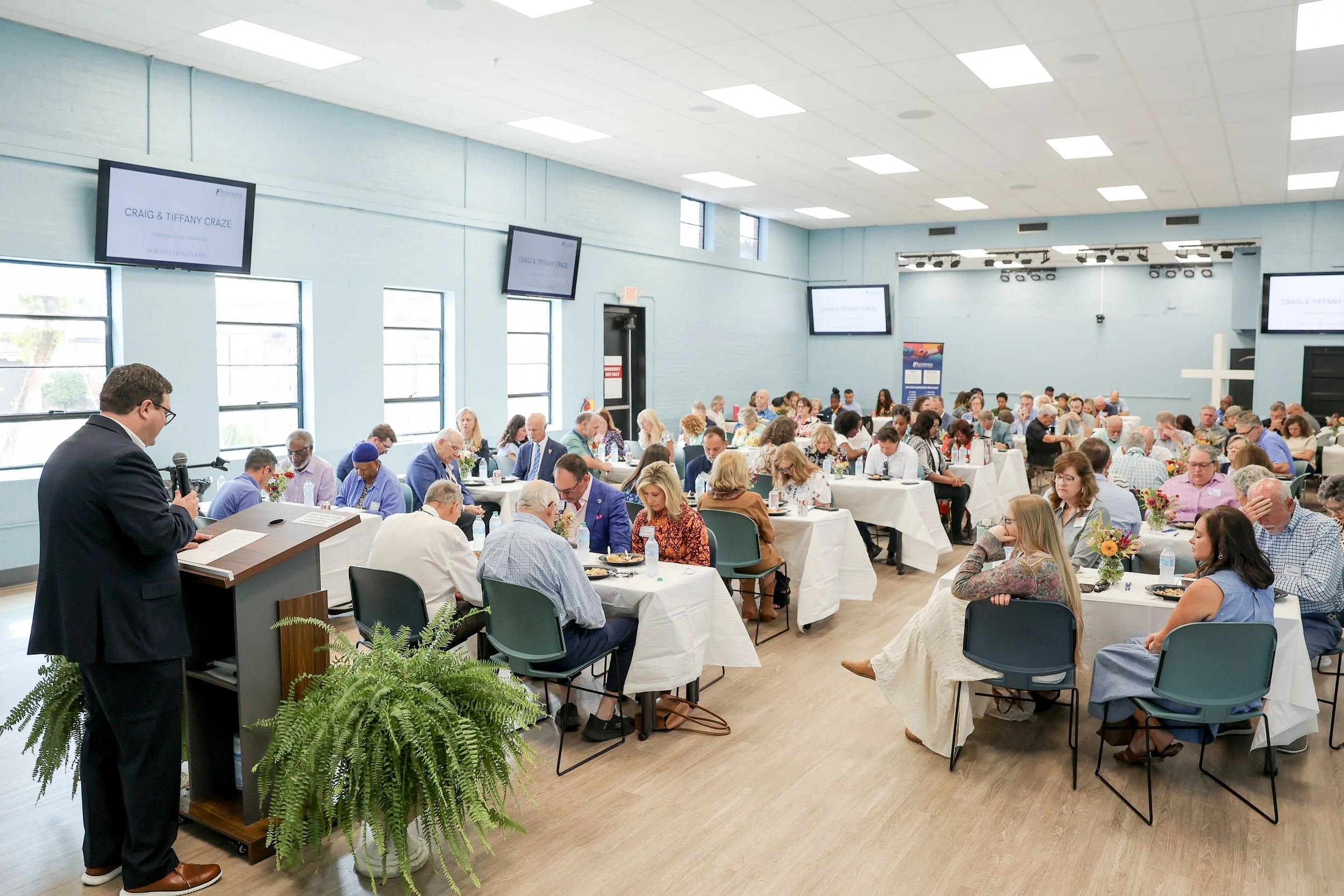
Caption: Community organizations, leaders and partners gathered for the 2026 Pathways Community Luncheon in Rock Hill. Photo courtesy of Visions by Vanessa.
I thought about this recently while attending the 2026 Pathways Community Luncheon in Rock Hill, South Carolina—not only as the founder of Bring Freedom, but as a member of the Pathways Board.
Pathways brings multiple community organizations and resources together in one location.
That matters because people’s lives don’t divide themselves according to our organizational charts.
A behavioral-health challenge can affect employment.
Employment affects income.
Income affects housing.
Housing affects health.
Transportation can determine whether someone gets to an appointment.
A missed appointment can interrupt treatment.
And one interruption can begin another cycle of instability.
Strong communities therefore need excellent individual services.
But they also need strong connections between those services.
Fully Utilizing the Peer Network
This is where I believe communities have an opportunity.
The goal should not simply be to create a few peer-support positions and consider the work finished.
Imagine instead a community in which its peer-support network is intentionally connected across behavioral health, substance-use recovery, hospitals, housing, homelessness response, workforce development, reentry, family services and community organizations.
A hospital discharge doesn’t simply end with a piece of paper containing a phone number.
A referral doesn’t end when it is entered into a database.
A person doesn’t become someone else’s responsibility simply because they crossed an organizational boundary.
Peers can become part of the connective tissue between those systems.
That doesn’t mean promising that peer support will eliminate every hospitalization, prevent every crisis or save money in every program.
The research doesn’t support those claims.
It means recognizing something much more practical:
Fragmentation is expensive.
And when trained people with lived experience can help individuals navigate that fragmentation, maintain connection and move toward stabilization, communities should be measuring the value created—not simply the cost of employing the peer.
Lived Experience Belongs Upstream, Too
Fully utilizing lived experience also means looking beyond direct peer services.
People with lived experience belong on advisory councils, committees and boards.
They belong in program development, quality improvement, workforce development, training and community planning.
Their stories matter.
But their value does not end with their stories.
Sometimes the person who can show us where the safety net has a hole is someone who once fell through it.
Sometimes that person eventually becomes the peer helping someone else navigate it.
Sometimes they become the employee designing a better process.
Sometimes they become the trainer teaching organizations what they have learned.
And sometimes they become the board member helping determine what happens next.
That is why investment in lived experience is bigger than representation.
A fully utilized peer-support network is an investment in a community’s capacity to connect people earlier, reduce fragmentation, support stabilization and make better use of the resources that community is already paying for.
The question isn’t simply what it costs to employ peers.
We also need to start measuring what fragmentation costs us when we don’t.
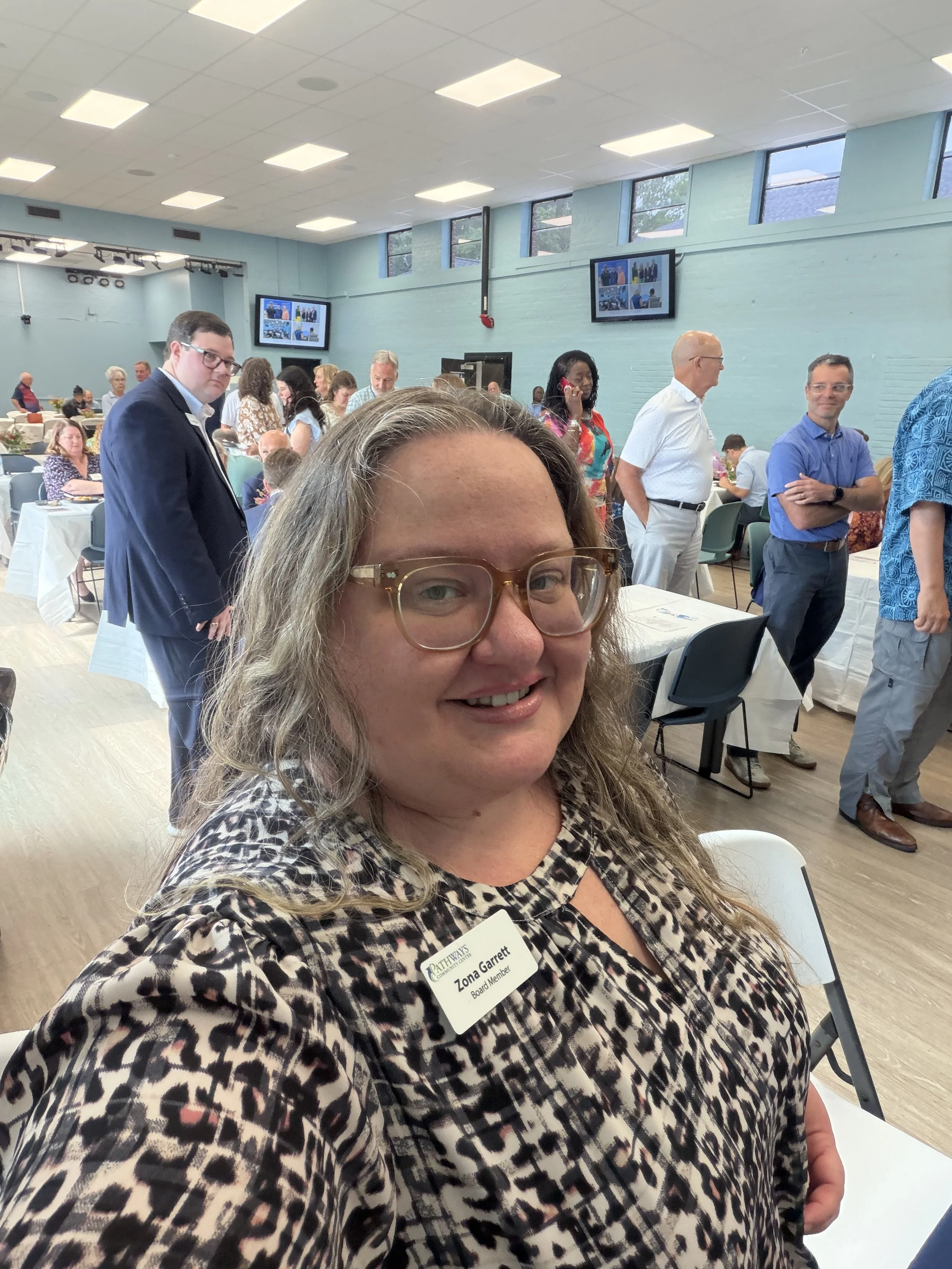
Caption: Zona Garrett, Bring Freedom founder and Pathways Community Center board member, at the 2026 Pathways Community Luncheon.
References available.